
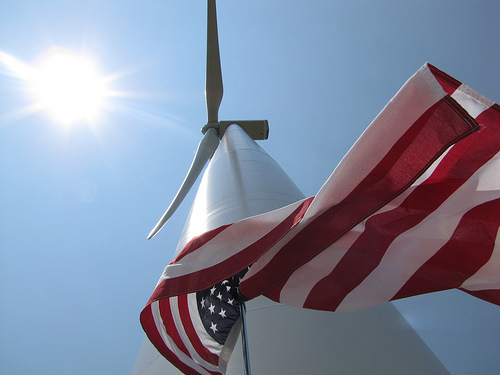
A moral, economic, and national imperative for the 21st century.
Energy has always been more than fuel. It is the lifeblood of a nation’s economy, the foundation of its security, and the measure of its sovereignty. From the coal mines of Pennsylvania to the oil fields of Texas, energy has powered American progress, lifted families into the middle class, and allowed the nation to defend freedom across the globe. When energy independence is lost, so too is a measure of control over destiny.
Today, America stands at a crossroads. Global volatility, rising costs, and foreign entanglements have once again exposed the weakness of dependence. The call to restore full American energy independence is not merely an economic policy — it is a moral duty rooted in stewardship, faith, and the promise of self-reliance.
The Heritage of Self-Reliance
From the earliest settlers who harnessed rivers and timber, America’s story has been one of resourcefulness. The Founders understood that freedom depended on the ability to sustain the nation’s needs within its own borders. As early as the 18th century, Alexander Hamilton argued that manufacturing and resource development were essential to national independence. Jefferson, though agrarian in vision, agreed that self-sufficiency was essential to liberty.
Through the Industrial Revolution, America’s energy base — coal, oil, and later hydroelectric power — became symbols of independence. By the mid-20th century, energy production wasn’t simply a business sector; it was a patriotic enterprise. Workers in refineries, power plants, and oil rigs viewed their labor as a contribution to national defense.
When the energy crises of the 1970s struck, America was reminded of an old truth: whoever controls your energy controls your economy. Gas lines snaking through cities became a symbol of foreign leverage. The response was both industrial and cultural — a push to reclaim autonomy through technology, exploration, and discipline.
The idea of America First applies here in its purest form: a free people should never be beholden to those who do not share their values.
The Cost of Dependence
Dependence comes at a price, and that price is paid not just in dollars but in dignity. Every imported barrel of oil represents a lost opportunity for American labor and a transfer of wealth to regimes that often oppose liberty.
According to the U.S. Energy Information Administration (EIA), the United States imported roughly 8.3 million barrels of petroleum per day in 2023. While that figure includes some refined product for trade balance, it also reflects an avoidable vulnerability. Every pipeline delayed, every drilling permit stalled, and every refinery shuttered pushes the nation further from autonomy.
The social consequences ripple outward. Energy costs affect everything — food, housing, manufacturing, and transportation. When prices rise, inflation follows, striking hardest at working families. Between 2021 and 2023, average U.S. household energy costs increased nearly 23 percent, the largest surge in over a decade. Those increases are not acts of nature; they are policy choices.
Dependence also has moral costs. Many of the nations supplying global energy operate under oppressive regimes, exploit workers, or fund extremism. Buying from them while restricting responsible American production is not environmental stewardship — it is hypocrisy.
Energy as a Moral Issue
The call for independence is not only pragmatic but moral. Energy policy reflects how a nation understands stewardship. In the biblical sense, stewardship means managing creation wisely, not abandoning it. To produce energy responsibly — with innovation, safety, and environmental balance — honors both man’s duty to the earth and to his fellow citizens.
True sustainability means enabling families to heat their homes, farmers to run their equipment, and factories to produce without crippling costs. A nation that prioritizes energy poverty in the name of ideology commits a quiet injustice against its people.
The moral path is balance: innovation guided by integrity, conservation rooted in gratitude, and development anchored in responsibility.
The 21st-Century Energy Landscape
Technological breakthroughs have changed what independence means. The shale revolution of the 2010s, driven by hydraulic fracturing and horizontal drilling, transformed America from the world’s largest energy importer into its leading producer. By 2019, for the first time in nearly 70 years, the nation became a net exporter of petroleum.
Yet that progress proved fragile. Policy reversals, regulatory constraints, and a shift toward foreign supply chains reversed much of that momentum. In 2023, the U.S. once again imported millions of barrels per day even as domestic reserves sat untapped.
The future of energy independence does not lie in nostalgia but in innovation. The United States holds the world’s largest recoverable reserves of oil, natural gas, and coal, yet it also leads in renewable technology, nuclear advancement, and carbon capture research. No nation is better positioned to meet global energy needs responsibly — if it chooses to.
Faith and Stewardship in Energy Policy
Scripture reminds believers that “to whom much is given, much will be required.” America has been blessed with extraordinary resources — vast land, diverse climates, and boundless ingenuity. To squander those blessings out of political hesitation or ideological fear is a form of negligence.
Energy independence aligns with faith-based stewardship. It demands balance: protecting the environment without idolizing it, providing for citizens without exploiting them, and sustaining growth without greed. Faith teaches moderation, not paralysis.
Communities of faith have historically played a quiet but vital role in the moral framing of industry — advocating for fair wages, safe conditions, and honest enterprise. The energy sector can be an extension of that witness when guided by principles rather than politics.
Innovation and the American Spirit
Energy innovation is the new frontier of national defense. The same inventiveness that sent men to the moon can secure the nation’s energy future. Small modular nuclear reactors, advanced geothermal systems, next-generation solar, and biofuel development all carry the potential to sustain freedom for centuries.
The private sector, when freed from overregulation, leads this transformation naturally. Elon Musk’s SpaceX and Tesla, Continental Resources in shale, and countless small firms across the Midwest are modern symbols of frontier courage. What unites them is not ideology but confidence — the belief that America still solves problems faster and fairer than any bureaucracy ever could.
A government that truly believes in its people empowers them to innovate. An America First energy policy rewards entrepreneurship and unleashes creativity.
Rural America: The Forgotten Backbone
No conversation about energy independence can ignore rural America. The heartland supplies the resources that power the cities — oil, gas, corn ethanol, wind, and now solar. Yet these communities often receive the least recognition and support.
Revitalizing rural economies through energy jobs and infrastructure is not charity; it is restoration. Every well drilled, turbine built, or refinery upgraded creates skilled work and generational stability. In the Dakotas, Texas, and Appalachia, families are proving that economic growth and environmental respect are compatible.
Infrastructure investment should prioritize those regions that feed and fuel the nation. Roads, pipelines, broadband, and ports all form the arteries of self-reliance.
Global Responsibility through Strength
Critics of America First argue that self-reliance means isolation. The opposite is true. A strong, energy-secure America leads the world more effectively than a dependent one. Energy dominance allows moral leadership — the ability to export freedom rather than import instability.
When the United States produces enough energy to share with allies, it weakens authoritarian powers that use oil and gas as weapons. The 2022–2023 European energy crisis proved that dependence on hostile suppliers leads to political vulnerability. America can prevent such crises not by lecturing the world, but by leading it through abundance.
The moral dimension of strength is service. Energy independence gives the U.S. the freedom to help without being manipulated, to lead without being indebted.
Environmental Balance and Truth
Environmental care must be rooted in truth, not fear. The U.S. has reduced its carbon emissions more than any other major nation since 2005, largely through innovation in natural gas and efficiency. Technological solutions — not bans, taxes, or prohibitions — drive progress.
True environmentalism honors the Creator by using creation wisely. A society that values life and liberty will naturally care for the earth, because stewardship grows from gratitude. Energy independence achieves that harmony: protecting the environment while empowering the people.
The Role of Policy and Leadership
Energy policy is ultimately moral leadership in action. Legislators and executives shape not only markets but mindsets. Policies that promote exploration, streamline permits, and reward domestic investment restore confidence.
Leaders must also speak truthfully about trade-offs. Every kilowatt has a source, every regulation has a cost, and every delay has a consequence. Transparency builds public trust far more effectively than slogans about “green transitions.”
An America First energy vision therefore combines realism with optimism — belief in technology, respect for nature, and trust in the people who do the work.
The Next Generation’s Inheritance
The children of this nation will live with the energy decisions made today. If dependence persists, they will inherit scarcity and inflation; if independence is restored, they will inherit opportunity and hope.
Education in science, engineering, and moral philosophy must intertwine. A young engineer who sees his work as service, not profit, will invent responsibly. A farmer who understands conservation as gratitude will manage land wisely. A policymaker who recognizes energy as moral stewardship will legislate with humility.
The next generation’s inheritance must be freedom — the freedom to innovate, to build, and to believe without fear of shortage or coercion.
Conclusion: Freedom Fueled by Faith
Energy independence is not a matter of economics alone; it is the practical expression of liberty. A nation that controls its own power controls its future. Dependence invites manipulation; independence cultivates peace.
To restore American energy independence is to restore the covenant of self-government — to live within our means, create with our hands, and thank God for the resources that make both possible.
In every sense, America First means stewardship first. It means honoring the Creator by caring for His creation, serving the nation by strengthening its foundation, and leading the world by example.
The American story began with courage and conviction. Its next chapter must be written with the same. The engines that built the world can once again build a future worthy of its past — a future powered not only by fuel but by faith.
Sources
U.S. Energy Information Administration – Annual Energy Outlook 2024
U.S. Department of Energy – U.S. Energy Facts and Figures 2023
Bureau of Labor Statistics – Consumer Energy Index 2023
Reshoring Initiative – Manufacturing Jobs Report 2023
Pew Research Center – Religion and Community Engagement 2024
Brookings Institution – Energy Policy and Rural Development 2024
Heritage Foundation – Energy and National Security Brief 2024
Congressional Budget Office – Macroeconomic Outlook 2025–2035
Environmental Protection Agency – Carbon Emissions Trends Report 2024