
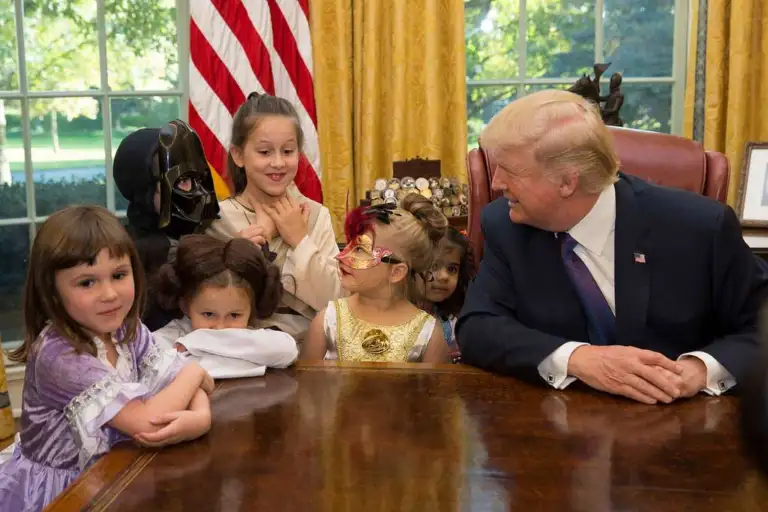
President Donald Trump’s new investment program for children officially went live on July 4, 2026. Trump Accounts are designed to give young Americans something millions of adults never received: an early, structured stake in the growth of the American economy.
The idea is straightforward. Open an account for a child, place the money in low-cost funds holding shares of American companies, protect it from casual withdrawals during childhood, and allow time and compound growth to do their work. For eligible children born from 2025 through 2028, the federal government adds a one-time $1,000 seed contribution.
Rather than teaching children to view business merely as something to regulate or tax, Trump Accounts invite them to become owners. A child with an account can watch American companies grow and learn how markets build wealth.
Here is what parents, grandparents, employers, and other Americans need to know.
What Is a Trump Account?
A Trump Account is a new tax-advantaged account created by the One Big Beautiful Bill Act, enacted July 4, 2025. Under the tax code, it is a special type of traditional individual retirement account established for a child.
During the account’s “growth period,” which ends on December 31 of the year the child turns 17, special rules govern contributions, investments, management, and withdrawals. Beginning January 1 of the calendar year in which the child turns 18, most ordinary traditional-IRA rules apply.
The account belongs to the child, who is called the account beneficiary. A parent, guardian, or another authorized adult acts as the responsible party while the child lacks legal capacity. That adult manages contributions and permitted investment choices but does not own the money.
Who Can Have One?
Trump Accounts are not limited to newborns. An election can generally be made for a child who is under 18 at the end of the election year and has a valid Social Security number. The election must be completed no later than December 31 of the year the child turns 17.
The basic account and the $1,000 federal deposit are separate questions. A child may qualify for an account without qualifying for the government seed money.
Who Gets the Free $1,000?
The Treasury pilot contribution is available when all five conditions are satisfied:
The child must have been born after December 31, 2024, and before January 1, 2029; be a United States citizen; have a valid Social Security number; qualify as the child of the authorized person making the election; and not have previously received the pilot contribution.
The $1,000 is paid once. It does not reduce the ordinary $5,000 annual contribution limit. It is also not automatic. An authorized adult must elect to receive it, either through the official process or by checking the appropriate box on Form 4547.
A child born outside the 2025 through 2028 window can still have a Trump Account but will not receive the federal $1,000 under the current pilot program.
How Do Families Open an Account?
Families now have several official routes. They can submit an election through their IRS Individual Account, use the online Form 4547 process linked by the government, complete paper Form 4547, or begin through the official Trump Accounts app and website.
Form 4547 requests identifying information for the authorized adult and child. A separate box requests the $1,000 pilot contribution.
When the $1,000 election is not being made, proposed federal rules generally give priority to a legal guardian, then a parent, adult sibling, and grandparent. Families with unusual arrangements should review current IRS instructions.
Parents should use official government channels. New programs attract imitation websites and identity thieves. The legitimate federal website uses a dot-gov address, and the IRS will not demand gift cards, cryptocurrency, or an “activation fee.”
When Can Money Go In?
Contributions began July 4, 2026. During the growth period, money may come from parents, grandparents, relatives, friends, employers, state or local governments, and qualifying charitable or philanthropic programs.
A child does not need earned income to receive contributions during the growth period. That is a major difference from an ordinary Roth or traditional IRA, which generally depends on taxable compensation.
For private contributions, the annual limit is $5,000 per child. The limit is scheduled for cost-of-living adjustments after 2027.
The federal $1,000 pilot deposit does not count against the $5,000 limit. Certain qualifying government or nonprofit contributions made through Treasury also do not count against it. Rollover transfers from another Trump Account are excluded as well.
How Do Employer Contributions Work?
An employer may contribute to the Trump Account of an employee or the employee’s dependent through a qualifying employer program. Up to $2,500 per year can be excluded from the employee’s gross income, with inflation adjustments scheduled after 2027.
Employer money does count toward the overall $5,000 annual limit. For example, if an employer contributes $2,500, parents and other private contributors generally have $2,500 of remaining space for that year.
This feature could become one of the program’s strongest advantages. A Trump Account contribution is a family-centered workplace benefit that small and large businesses can use to recruit employees, reward retention, and invest in workers’ children. Treasury reported at launch that more than 50 companies had committed to offering contributions.
Are Family Contributions Tax-Deductible?
Generally, no. Contributions from parents, relatives, friends, or the child are made with after-tax dollars and are not deductible on the contributor’s federal return.
Those deposits create “basis” in the account. In plain English, the same after-tax principal should not be taxed again when it is eventually distributed, although earnings and amounts that entered without basis are generally taxable under IRA rules. Families should retain account records and consult current IRS guidance when withdrawals begin.
The $1,000 pilot contribution, qualifying general contributions, and tax-preferred employer contributions do not create basis.
Where Is the Money Invested?
Trump Accounts are intentionally limited to diversified, low-cost investments during childhood. The law generally requires funds that track a broad index of primarily American companies, do not use leverage, and charge annual fees no higher than 0.1 percent.
At launch, Treasury selected the State Street SPDR Portfolio S&P 500 ETF, ticker SPYM, as the default investment. Treasury also selected four additional funds expected to become available for allocation choices: IVV, VTI, SPTM, and ITOT. Together, these options provide exposure to large companies or the broader United States stock market.
The restrictions keep the account focused on long-term ownership rather than speculation. A parent cannot use the account to chase a single stock, trade options, purchase cryptocurrency, or repeatedly jump between fashionable investments.
Can the Money Lose Value?
Yes. A Trump Account is an investment account, not a federally guaranteed savings account. Stock indexes have historically rewarded long holding periods, but markets decline, sometimes sharply. A child’s balance can be lower at age 18 than it was at an earlier point.
The program addresses that risk through diversification, low fees, and time. An account opened at birth may remain invested for nearly 18 years before ordinary withdrawals become available. That long horizon gives the market time to recover from many, though not necessarily all, downturns.
Families should understand that government seed money is real, but projections are estimates, not promises.
Can Parents Withdraw the Money Early?
Generally, no. During the growth period, ordinary withdrawals are prohibited. The main exceptions involve correcting excess contributions, transferring the full balance directly to another Trump Account, making a permitted rollover to the child’s ABLE account at age 17, or handling the beneficiary’s death.
This lockup is deliberate. It prevents a child’s long-term capital from becoming a household checking account. The parent manages the asset, but the asset belongs to the child.
Families needing accessible emergency savings should maintain a separate bank or brokerage account.
What Happens at Age 18?
Starting January 1 of the year in which the beneficiary turns 18, most traditional-IRA rules apply. The young adult gains broader control, but the account does not become a tax-free spending account.
Distributions may be subject to ordinary income tax and the additional 10 percent tax on early IRA withdrawals. Existing IRA exceptions can remove the additional penalty in certain circumstances, including qualifying higher-education expenses and up to the permitted amount for a first-home purchase. The taxable portion still must be calculated under federal rules.
The owner can also leave the money invested for retirement, allowing decades of additional compounding. For many families, that may be the most powerful option.
Is It Better Than a 529 Plan?
The accounts serve different purposes. A 529 plan is designed primarily for education and can provide tax-free qualified education withdrawals. A Trump Account has broader long-term potential but generally follows traditional-IRA taxation after the growth period.
Families committed to education funding may still prefer a 529 for that goal. Families seeking flexible, long-term ownership may value a Trump Account. Many households can use both.
A custodial brokerage account offers wider investments and easier access, but lacks the same federal structure and lockup. A Roth IRA can be extremely valuable for a working teenager, but requires earned income. Trump Accounts fill a different space by allowing childhood contributions without wages.
What Should Parents Do Now?
First, determine whether the child qualifies for the $1,000 pilot contribution. Second, submit the election through an official channel. Third, check whether either parent’s employer plans to contribute. Fourth, decide on a sustainable family contribution, even if it is modest. Finally, use the account as a teaching tool.
The official app includes lessons on saving, investing, compounding, diversification, and capital markets. Parents can review balances with children and teach that ownership is built through patience.
The Larger Promise
Trump Accounts will not erase every wealth gap, guarantee investment gains, or replace parental responsibility. What they can do is place millions of children inside the American ownership economy earlier than ever before.
The $1,000 seed is important, but the deeper reform is cultural. A nation of owners thinks differently about work, enterprise, profit, and the future. Children who see themselves as shareholders may better understand that successful companies create jobs, products, tax revenue, and opportunity.
President Trump’s program gives families a clear practical framework: start early, invest broadly in America, keep costs low, resist premature withdrawals, and let time work.
For parents, the message is simple. Open the account. Claim the seed money when eligible. Ask employers and relatives to participate. Contribute what the household can responsibly afford. Then teach the child that the account represents more than a balance.
It represents a piece of the American future, owned from the beginning.
Sources
- Internal Revenue Service materials explaining Trump Account eligibility, the $1,000 pilot contribution, authorized applicants, enrollment procedures, and the July 4, 2026 contribution start date.
- IRS Form 4547 and its official instructions, including the election process, Social Security number requirements, lack of an earned-income requirement, contribution classifications, basis treatment, withdrawal restrictions, and post-growth-period rules.
- Treasury Department launch materials covering the official Trump Accounts application, account dashboards, recurring contributions, financial-education modules, participating employers, and the absence of an account-opening charge.
- Federal Register regulations covering the growth period, $5,000 annual limit, inflation adjustments, $2,500 employer provision, contribution basis, qualifying government and charitable contributions, investment restrictions, fee ceiling, and withdrawal rules.
- Treasury Department information identifying SPYM as the default fund and IVV, VTI, SPTM, and ITOT as additional selected investment options.
- IRS guidance concerning the prohibition on ordinary withdrawals during childhood, the transition to traditional-IRA rules, and possible exceptions to the additional early-withdrawal tax.
- IRS fraud and scam guidance warning that government impersonators may demand gift cards, wire transfers, cryptocurrency, or sensitive personal information.
Publication note: This guide reflects federal information and proposed regulations available on July 12, 2026. Families should verify current IRS instructions before making contributions, withdrawals, or tax decisions.