
A story of conviction, courage, and the endurance of faith in an age of pressure.
Faith has always been the heartbeat of America. From the pilgrims who crossed an ocean for freedom of worship to the chaplains who prayed over soldiers on D-Day, belief has carried this nation through storms both natural and moral. But the modern age has brought new kinds of fire — cultural, social, and ideological — that test conviction in quieter but deeper ways.
Across the country, ordinary believers stand in that fire daily. Teachers, soldiers, business owners, and pastors now navigate workplaces and institutions where open faith can invite criticism. Yet their strength endures. What they share is not anger but assurance: that truth is worth defending, even when it costs comfort.
The Teacher Who Wouldn’t Hide Her Bible
In a small public school in Ohio, high-school literature teacher Amy McPherson kept a worn Bible on her desk beside The Odyssey and To Kill a Mockingbird. When a complaint arrived from a parent, she was asked to remove it. She complied, but the absence gnawed at her. The book wasn’t a prop — it was her anchor.
She later challenged the order through proper channels and was quietly allowed to keep it, provided she didn’t proselytize. When a local journalist asked why she persisted, she replied, “Because belief doesn’t stop at the classroom door. Integrity means being the same person everywhere.”
Her story reflects thousands of teachers nationwide who model quiet conviction: showing faith not through slogans but through patience, compassion, and moral consistency.
Firefighters in Prayer — Louisiana’s Brotherhood of Courage
When Hurricane Laura tore through Louisiana in 2020, firefighters from several parishes formed makeshift crews to rescue trapped families. Among them was Captain Daniel Cormier, who led night operations for 72 hours without sleep.
Between rescues, his team gathered in a flooded church parking lot to pray. The image of men in turnout gear kneeling in mud spread online. When asked why, Cormier said, “Because courage comes from somewhere. We wanted to remember Who gave it.”
Those prayers echoed America’s long tradition of first responders who draw strength from faith — from New York firefighters on 9/11 to volunteer crews in tornado-torn Oklahoma. Their faith is not political; it is practical. It keeps fear from turning into despair.
The Athlete Who Refused Silence
In 2022, collegiate soccer player Jaelene Daniels declined to wear a special team jersey that conflicted with her religious convictions. Her quiet decision ignited national debate. Through criticism and praise alike, she remained calm.
In later interviews, Daniels said, “I love my teammates. I respect every person. But faith doesn’t bend to fashion.”
Her courage represented a growing generation of young Americans who believe tolerance must run both directions. Daniels lost endorsements but gained respect from millions who saw grace under fire.
A Small-Town Business with a Big Conviction
In Michigan, bakery owner Rick Baird was asked in 2021 to remove Bible verses from his store’s social-media posts. He refused politely, saying his faith was part of his identity.
Rather than provoke outrage, he invited dialogue. “Come talk,” he posted, “coffee’s on me.” Local customers flooded in, many with differing beliefs. Sales went up, not down.
Baird’s response — hospitality instead of hostility — captured the best of public faith: firm in conviction, soft in tone.
Faith on the Front Lines — Chaplains in Uniform
In the U.S. military, chaplains serve soldiers of every belief. They hold services in tents, pray in convoys, and listen more than they speak. During Afghanistan’s final evacuations in 2021, Navy Chaplain Lt. Commander Michael Cross was photographed comforting Marines outside the Kabul airport.
He later told reporters, “Faith isn’t about politics or place. It’s about presence — being there when someone needs hope.”
From Normandy to Kandahar, the chaplain corps has embodied that truth: quiet courage rooted in calling.
Churches That Serve, Not Shout
In inner-city Chicago, New Hope Missionary Baptist Church turned its basement into a 24-hour safe space for teens escaping violence. Volunteers mentor, feed, and pray with them nightly.
Pastor Renee Thompson says her goal isn’t protest but presence. “We can’t change the city by yelling at it. We change it by loving it.”
Such ministries — whether Christian, Jewish, or Muslim — now fill civic gaps left by failing institutions. Across America, houses of faith run over half of all local food banks and family shelters, according to the Pew Research Center. In practice, compassion has become the most persuasive sermon.
Faith and the Public Square
Despite headlines predicting the decline of religion, surveys show that belief remains deeply woven into American identity. Pew’s 2024 study found that 78% of adults still describe themselves as religious or spiritual, and 59% pray at least weekly.
What has shifted is visibility. Many believers now express faith through service rather than speech — rebuilding homes, mentoring youth, caring for veterans. The public square may be noisy, but faith endures in deeds that no algorithm can censor.
The Cost — and Blessing — of Conviction
Living faith publicly carries risk: lost jobs, online ridicule, misunderstanding. Yet those costs refine rather than destroy belief. “Gold,” Scripture says, “is tested by fire.”
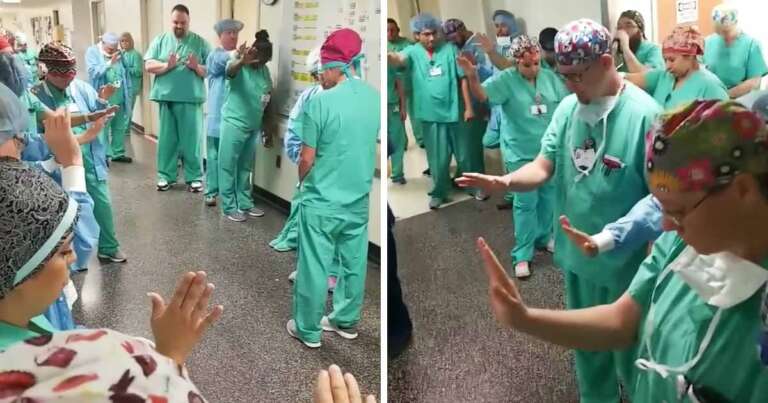
In legal cases across recent years — from students barred from wearing crosses to nurses disciplined for prayer — the outcomes vary, but the courage remains. For every story of conflict, there are thousands of quieter stories of grace: coworkers praying in hospital hallways, police officers gathering before shifts, students forming faith clubs after class.
The American promise has always included freedom of conscience. Protecting that promise protects diversity itself.
Faith and Freedom: A Shared Foundation
The founders never intended a secular vacuum. Jefferson’s Virginia Statute for Religious Freedom protected belief precisely because they understood its civic importance. Washington’s letters spoke of Providence. Lincoln, in the midst of civil war, called for national repentance and prayer.
In every era, faith renewed the republic’s moral center. Today’s believers continue that lineage, defending the right to live by conscience without demanding others share it.
Freedom of religion, rightly understood, guards freedom for everyone.
A New Generation of Believers
Polls show younger Americans less affiliated with organized religion, yet millions still seek spiritual meaning through community, music, and service. The He Gets Us campaign, campus ministries, and interfaith volunteer groups illustrate a quiet revival focused on authenticity over institution.
At a 2024 youth gathering in Dallas, over 60,000 high-schoolers met for worship and community service. “We’re not losing faith,” one organizer said. “We’re rediscovering ownership of it.”
This generation’s faith may look different, but its essence — courage, purpose, and love — remains unchanged.
Conclusion: Light in the Storm
Faith has never thrived because it was easy. It thrives because it is true. Across this country, ordinary Americans still kneel before dawn, pray before meals, and serve before asking. They do not seek fame; they seek faithfulness.
Faith under fire is faith refined. Its endurance is the nation’s inheritance — a reminder that liberty survives only when conscience remains free.
In every home, classroom, and battlefield where belief meets challenge, America’s soul is quietly defended — one prayer, one act of mercy, one life of conviction at a time.
Sources
Pew Research Center – Religion and Public Life in the U.S., 2024
Associated Press – Faith in the Military: Chaplains in Conflict Zones, 2022
The Tennessean – Churches Feed Communities Amid Lockdowns, 2020
Reuters – Faith and Public Life Feature Series, 2023
Freedom Forum Institute – First Amendment Case Studies, 2024
U.S. Department of Defense – Chaplain Corps Annual Review, 2023