
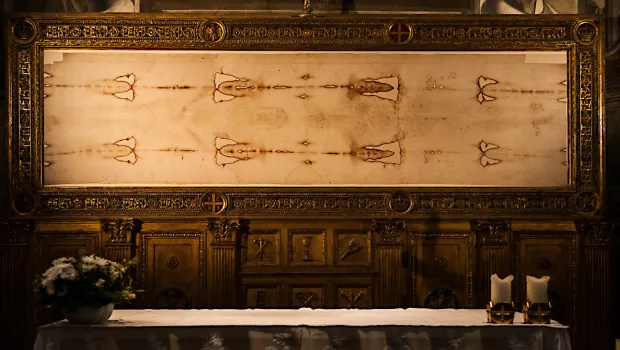
Few relics in human history have provoked such intense investigation as the Shroud of Turin, a linen cloth imprinted with the faint image of a crucified man. It has been studied by physicists, chemists, pathologists, historians, and skeptics for more than a century. To many, it represents the burial cloth of Jesus of Nazareth. To others, it is a brilliant medieval forgery. Yet, despite thousands of pages of scientific analysis and debate, no one has successfully replicated its unique characteristics.
This article presents the strongest available evidence that the Shroud of Turin is, in fact, the burial shroud of Jesus. The argument rests not on sentiment or theological assumption but on cumulative data from multiple disciplines: chemistry, physics, history, forensic medicine, and statistics. The case for authenticity is probabilistic and convergent rather than dogmatic. When viewed together, these independent lines of evidence favor authenticity far more than forgery.
The Physical and Chemical Enigma of the Image
In 1978, a consortium of American scientists under the Shroud of Turin Research Project (STURP) gained unprecedented access to the relic. Their mission was clear: determine how the image formed. They employed an array of non-destructive analytical techniques, including infrared spectroscopy, x-ray fluorescence, ultraviolet photography, and microscopy.
After years of study, STURP’s official conclusion was startling: “The image is that of a real human form of a scourged, crucified man. It is not the product of an artist. The blood stains are composed of hemoglobin and also give a positive test for serum albumin. The image is an ongoing mystery.”
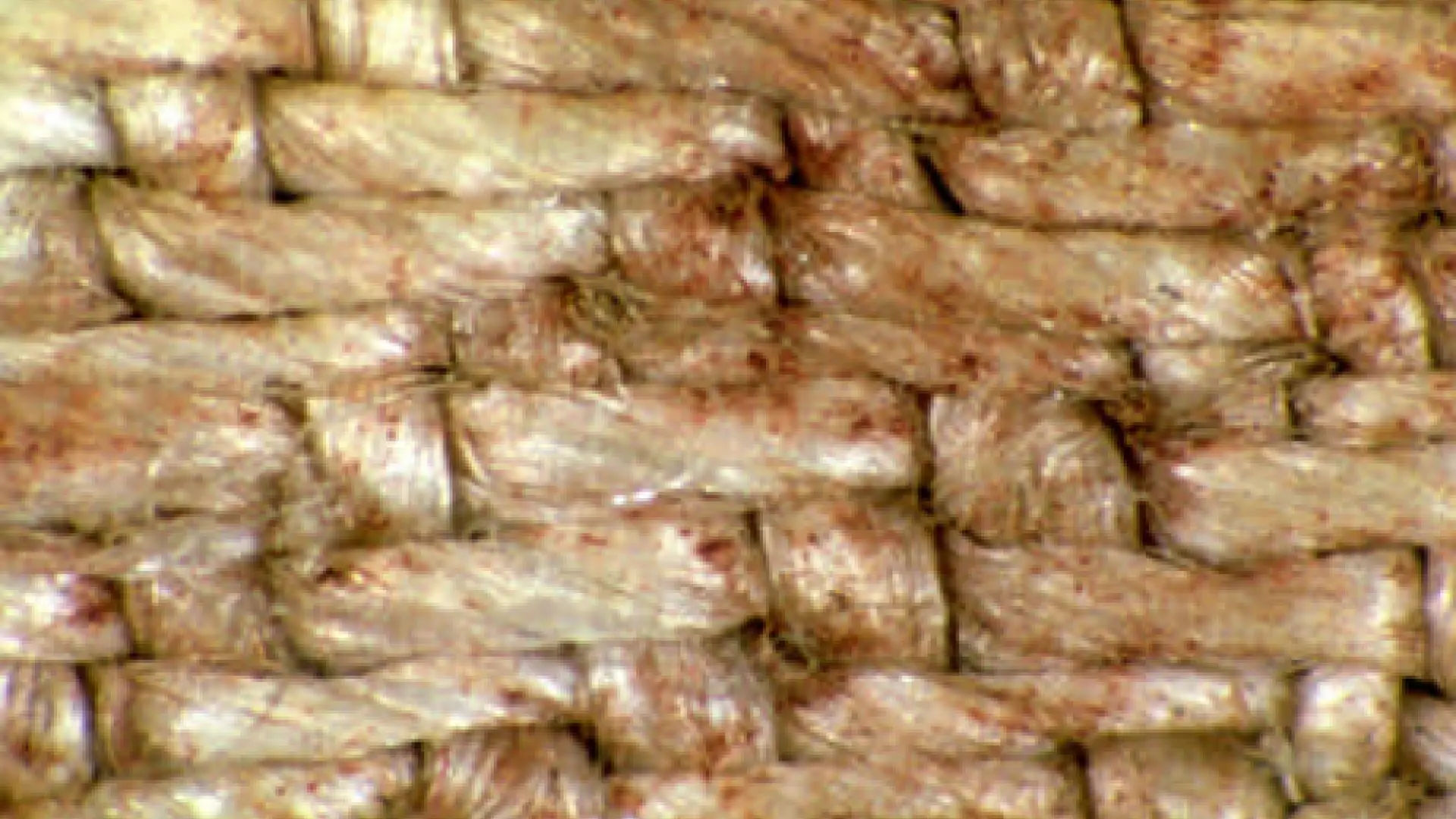
What they found defied conventional explanation. The image resides only on the outermost fibrils of the linen’s surface. It is superficial to a depth of about 0.2 microns—thinner than a human hair by a factor of hundreds. No paint, pigment, dye, or binder penetrates the fibers. The discoloration results from oxidation and dehydration of the linen cellulose, not from any applied substance. This microchemical signature rules out painting, scorching, or printing.
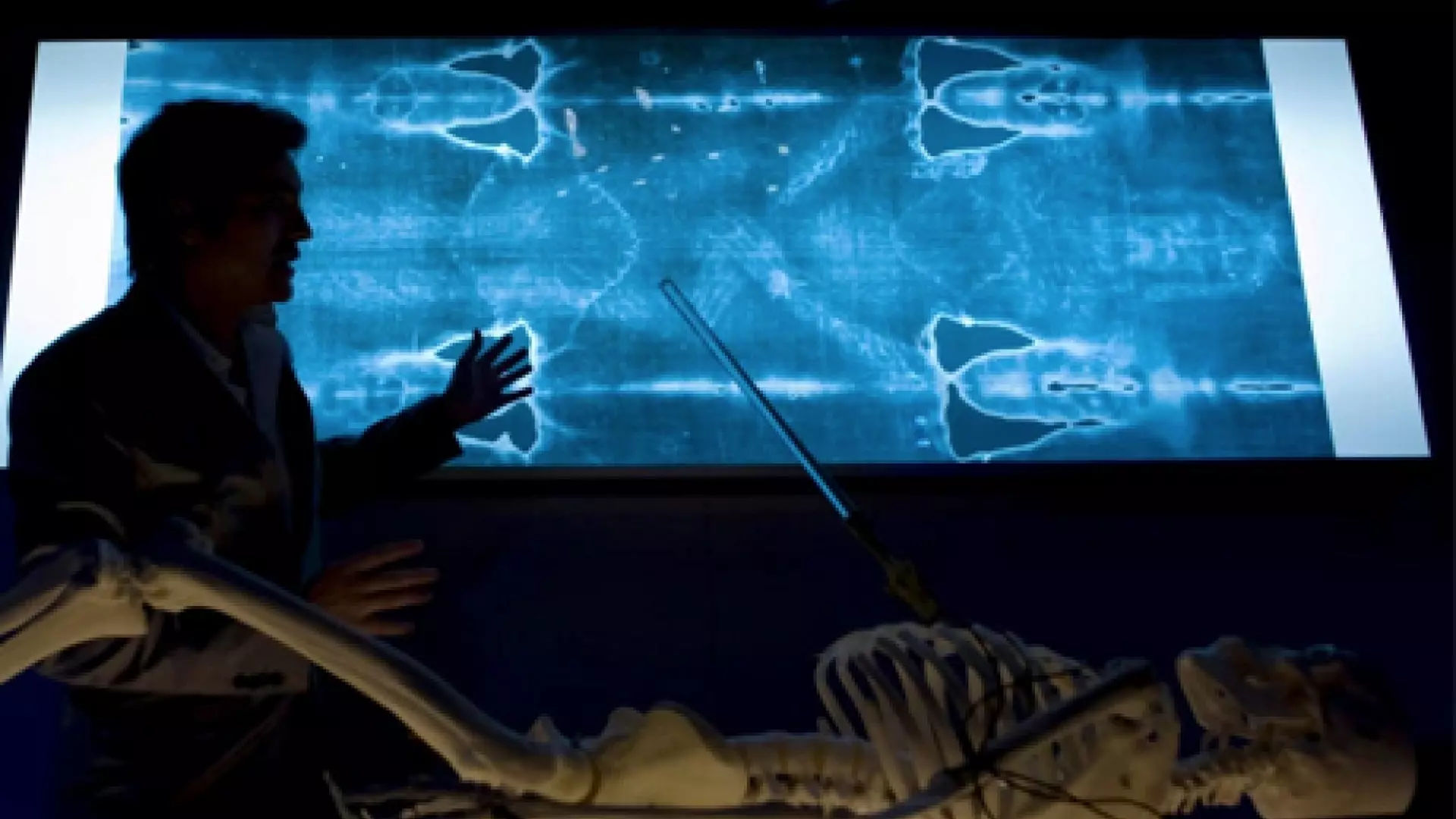
The image also contains three-dimensional information. When mapped using NASA’s VP-8 image analyzer, brightness levels correspond to topographical distance between body and cloth. No known photograph, painting, or rubbing process of the Middle Ages encodes that property.
The Shroud’s fluorescence behavior under ultraviolet light adds to the puzzle. It does not glow like a scorch or pigment, which means the discoloration mechanism was non-thermal and non-chemical. Researchers have proposed models involving short bursts of ultraviolet or vacuum ultraviolet radiation, electron corona discharge, or low-energy radiation from within the cloth. None have yet been able to reproduce the precise pattern and microscopic distribution observed on the original linen.
In plain scientific terms, no one knows how the image formed.
Blood Chemistry and Forensic Integrity
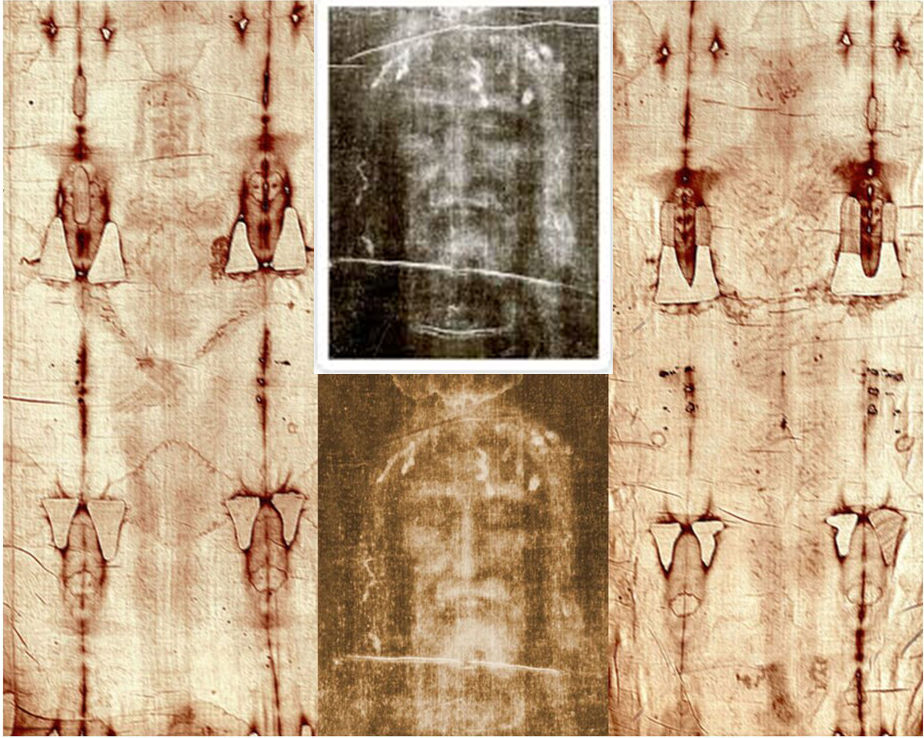
A consistent objection to authenticity has been the claim that the “blood” is not real. However, chemical tests have repeatedly confirmed the presence of genuine blood components. Heller and Adler’s chemical analyses detected hemoglobin derivatives and serum albumin. Ultraviolet fluorescence revealed serum halos surrounding many stains, which is what one expects when real blood separates into plasma and clotting components on a porous surface.
Spectroscopic studies identified the iron spectrum characteristic of heme complexes, not the spectrum of simple iron oxide pigments. Later research suggested the blood is of type AB, though the blood-type claim remains debated because of degradation and contamination over time. What is not debated among chemists is that the red material is indeed blood.
Medical analysis of the Shroud’s wounds indicates remarkable anatomical and forensic realism. The bloodstains follow gravitational flow patterns consistent with a body suspended vertically, then laid horizontally. The scourge marks correspond to the leaded Roman flagrum, a whip with metal tips that produced dumbbell-shaped wounds.
The wrist and foot wounds correspond to Roman crucifixion techniques rather than the artistic convention of nails in the palms. The side wound aligns with a post-mortem spear thrust, producing blood and fluid consistent with separation of pericardial or pleural effusion. Around the scalp appear puncture marks and flows consistent with a crown or cap of thorns, not a circlet.
These forensic consistencies are compelling because they predate modern knowledge of crucifixion physiology. Medieval artists routinely depicted nails in the palms and blood flowing in directions inconsistent with gravity. The Shroud does not. It records details that were not common artistic knowledge until centuries later.
The Image’s Relationship to the Resurrection Narrative
Proponents of authenticity note that the image’s unique characteristics resemble what would be expected from a brief, high-energy event that affected only the cloth’s outer fibrils without disturbing the blood. If the body emitted a burst of radiation or photonic energy during resurrection, the physical effects would align with the observed data: a superficial image with no mechanical pressure, no brush strokes, no pigment, and precise anatomical detail.
While such hypotheses cannot be directly tested, they remain consistent with all known evidence. Every known artistic or chemical method fails to reproduce simultaneously the image’s non-directional shading, superficiality, three-dimensional encoding, and chemical composition.
Even advanced laser-induced coloration experiments using excimer ultraviolet sources create effects that resemble but do not replicate the Shroud’s complexity. The Shroud’s image remains a technological impossibility even today.
The Problem with the 1988 Radiocarbon Test
The greatest apparent challenge to authenticity came from radiocarbon dating performed in 1988. Three laboratories—Oxford, Zurich, and Tucson—tested fibers from a single corner of the cloth and reported a date range between 1260 and 1390 CE. To most observers, this settled the issue: the Shroud was medieval.
However, science depends on representativeness, and the 1988 sample site is now known to be non-representative of the main cloth. The chosen corner was adjacent to a section rewoven after the 1532 fire that damaged the relic. Textile experts analyzing photomicrographs later discovered spliced fibers, dyeing, and cotton intermixing not found elsewhere on the cloth.
Subsequent statistical reanalysis of the raw data, made public decades later, revealed significant heterogeneity among the subsamples. The age estimates vary systematically across the samples’ positions, which violates the assumption of homogeneity required for accurate radiocarbon results. This pattern suggests that contamination, repair, or differential cleaning affected the measurements.
Further studies using mechanical tensile tests, FT-IR spectroscopy, and Raman spectroscopy on different linen threads yielded age estimates centering around the first century, with uncertainty spanning several centuries. These methods are independent of carbon-14 and rely on material aging properties such as cellulose degradation and crystallinity changes. While not yet universally accepted, they corroborate an earlier origin.
In essence, the 1988 carbon data proves that the corner sample was medieval, not necessarily that the entire Shroud was. Without new multi-site testing under transparent conditions, the question of exact age remains scientifically open.
The Sudarium of Oviedo: A Second Witness
A separate but related artifact strengthens the authenticity argument: the Sudarium of Oviedo, a small, bloodstained cloth kept in Spain and documented since the seventh century. Tradition holds it covered the head of Jesus after death, preceding the burial wrapping.
Forensic and geometric comparisons between the Sudarium and the Shroud reveal astonishing correspondences. The blood flows, wound locations, and facial proportions match closely. Both show evidence of a post-mortem nasal flow consistent with a man who died in a vertical position. Both bear type AB blood, though again this typing remains a secondary observation.
If these two clothes touched the same head within a short time frame, it explains the congruence. The Sudarium’s secure presence in Spain centuries before the Shroud’s known European debut implies that the Shroud’s image pre-existed any medieval artistic effort. The simplest explanation is shared origin: both covered the same historical individual.
Historical Continuity from Edessa to Constantinople to France
The documented history of the Shroud can be traced backward from fourteenth-century France, where it appeared in the possession of the knight Geoffroi de Charny, to possible earlier manifestations in Constantinople and Edessa (modern Şanlıurfa). Byzantine records mention an image of Christ “not made by human hands,” known as the Mandylion or the Image of Edessa.
When the Mandylion was transferred from Edessa to Constantinople in 944, chroniclers described it as a cloth bearing the full figure of a man, folded so that only the face was visible. This description matches the Shroud’s dimensions when folded in eighths.
French crusader Robert de Clari, an eyewitness to the Fourth Crusade of 1203–1204, recorded that in the Church of Blachernae he saw “the shroud wherein Our Lord had been wrapped, which every Friday was raised up so that the figure of Our Lord could be plainly seen.” After Constantinople’s sack, he said, no one knew what became of it. A century later, a relic matching that description appeared in France.
The historical continuity is not ironclad but highly suggestive. There is no record of any artist creating such an object in the interim, nor is there evidence of another shroud-like image displayed elsewhere. The probability that two unrelated image-bearing burial cloths of Christ existed independently and sequentially strains credibility.
The Forensic Consilience of Details
Science values consilience—the alignment of independent findings toward a coherent conclusion. The Shroud’s various features cohere across disciplines in a way that supports authenticity.
- Anatomy: The proportions and musculature are anatomically accurate for a real male body, about 5’11” tall, consistent with first-century Mediterranean norms.
- Blood Flow Dynamics: The stains match both gravitational and post-mortem separation patterns, which would be nearly impossible to paint realistically without modern forensic knowledge.
- Textile Type: The linen is a three-to-one herringbone weave, consistent with high-quality first-century textiles. Traces of cotton interwoven appear limited to repaired sections.
- Pollen and Plant Evidence: Botanical studies have identified pollen grains from plants native to the Near East, including species unique to the Jerusalem area, though some dispute these findings.
- Coin Impressions: Some photographic analyses suggest faint impressions resembling first-century coinage over the eyes, although this remains controversial.
Each detail on its own may be inconclusive. Together they form a convergence that fits one specific historical context: a Jewish burial following Roman crucifixion in the first century.
Addressing Common Objections
Was it painted?
The absence of pigments, binders, or brush strokes rules this out. No medieval artist possessed a method to color only the outermost microfibers without affecting the inner threads or creating capillary diffusion.
Could it be a scorch from a statue or bas-relief?
Thermal experiments produce fluorescence and damage not found on the Shroud. They also fail to reproduce the continuous tonal range or three-dimensional information.
Did a chemical reaction such as Maillard browning cause the image?
Some researchers propose vapor reactions between amines from a corpse and sugars in the linen. While partial images have been produced this way, they lack the Shroud’s resolution and do not explain the uniformity of discoloration.
What about the radiocarbon date?
The 1988 date is valid only for the single, possibly rewoven sample. Multiple independent analyses show that sample to be anomalous. Without new, multi-site testing, any global conclusion remains unscientific.
Why would the Shroud survive intact for two millennia?
Ancient linens can survive in controlled conditions, especially if kept dry and protected. Egyptian mummy wrappings thousands of years older are still extant. The Shroud’s preservation is unusual but not impossible.
Statistical Weighing: A Bayesian Perspective
From a Bayesian viewpoint, the question is not whether any single piece of evidence proves authenticity beyond doubt but whether the cumulative data make authenticity more probable than forgery.
Assume, hypothetically, equal prior probabilities for authenticity and forgery. Each independent datum—non-paint image, accurate forensics, Sudarium congruence, early historical references, inconsistent carbon data—tilts the likelihood ratio toward authenticity. The convergence of independent evidence raises the posterior probability substantially.
In contrast, the forgery hypothesis must explain numerous anomalies simultaneously: how a medieval artisan produced a superficial, three-dimensional image invisible to the naked eye at close range, used real human blood with anatomically correct post-mortem flows, matched first-century crucifixion details unknown to his era, and did all this without leaving any pigment or tool trace detectable under modern microscopy. The burden of proof thus increasingly shifts toward the skeptics.
The Path Forward for Science
A definitive answer requires renewed examination under modern protocols. A future investigation should include:
- Multiple Sampling Sites – Samples taken from different quadrants of the cloth, away from repaired areas, under full transparency.
- Chain of Custody and Open Data – All steps documented and published for independent replication.
- Complementary Dating Techniques – Combining radiocarbon, Raman, FT-IR, and mechanical aging measurements for cross-validation.
- Advanced Spectroscopy – High-resolution chemical mapping of image fibrils to test competing formation hypotheses.
- Parallel Study of the Sudarium – Coordinated forensic, proteomic, and isotopic comparison of both relics.
Only such a transparent, multi-institutional effort can resolve the debate scientifically. Until then, the most reasonable position is that the Shroud remains unexplained by any known medieval or modern technique and that its physical and historical attributes align most naturally with first-century origin.
The 3D Reconstruction by Paul Hanson
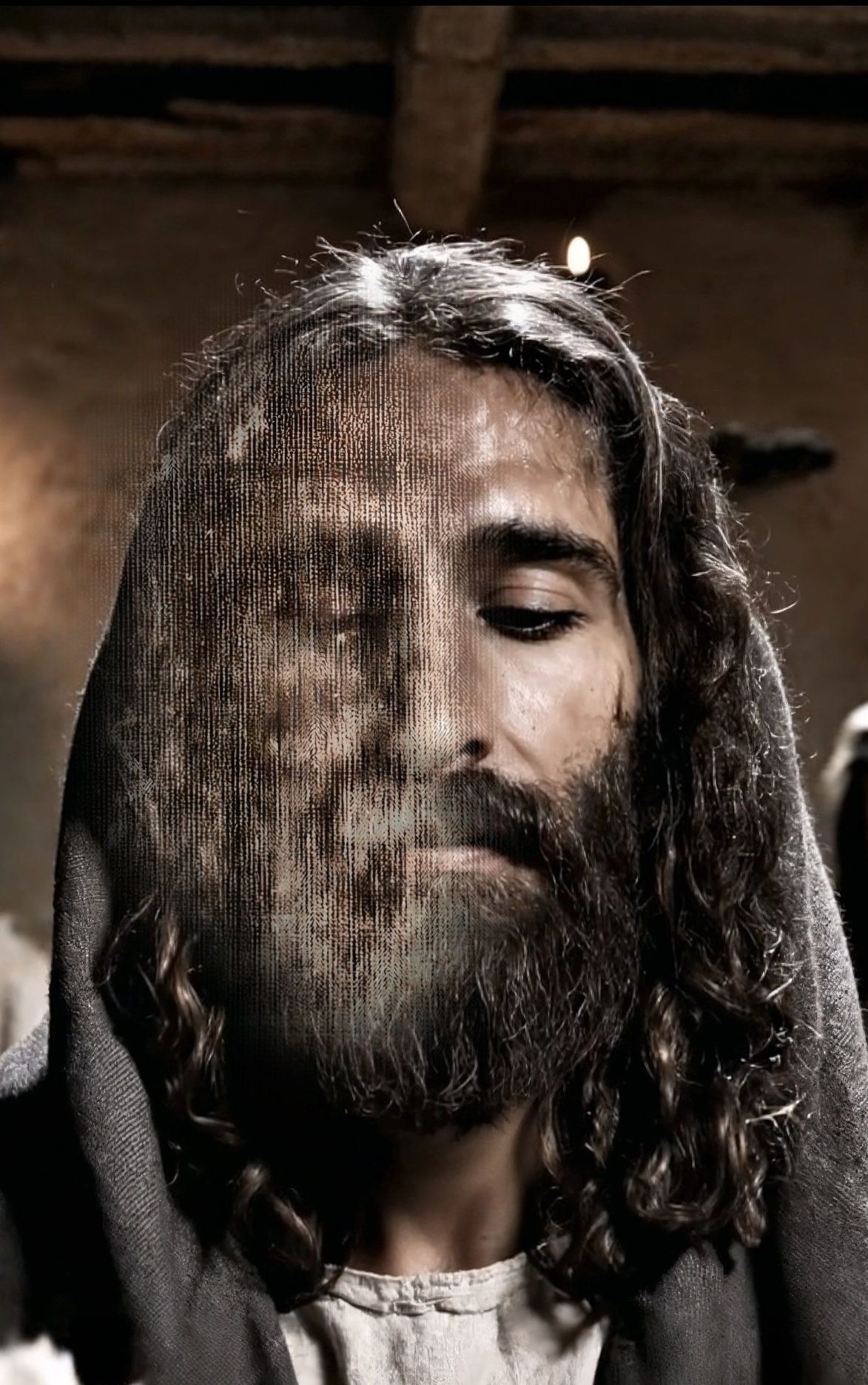
Digital artist Paul Hanson of Sheffield has used advanced 3D modeling to recreate the face seen on the Shroud of Turin, revealing what may be the most lifelike depiction of Jesus ever produced. Drawing on high-resolution scans and the Shroud’s built-in depth data, Hanson transformed the faint imprint into a three-dimensional portrait—a calm, bearded man with Middle Eastern features and visible traces of crucifixion.
His reconstruction does not attempt to alter the image or make it idealized; it brings to light the human likeness already encoded in the cloth. Through modern technology, Hanson has made the Shroud’s mysterious image tangible, offering a powerful visual glimpse of what could be the true face of Jesus. The face:
Conclusion
After more than a century of scrutiny, no evidence conclusively falsifies the Shroud’s authenticity, while numerous findings continue to support it. The image defies artistic replication, the blood is genuine, the anatomical details align with Roman crucifixion, and the cloth’s history plausibly extends back to the earliest centuries of Christianity.
Radiocarbon dating raised a challenge but not a fatal one. Reanalysis and additional evidence show that the test sample was non-representative. Meanwhile, independent relics like the Sudarium of Oviedo, historical testimony from Byzantium, and chemical aging studies all reinforce ancient provenance.
The Shroud of Turin stands as one of the most intensively studied artifacts on Earth. Its mystery endures because it fits no category known to science or art. Whether viewed through the lens of faith or forensic inquiry, it remains what its earliest witnesses claimed: a burial shroud that bears the image of a crucified man who, by every physical measure, could be Jesus of Nazareth.
At minimum, the Shroud is the most complex and scientifically resistant artifact ever examined. At maximum, it may be the material evidence of the most transformative event in human history.
Either way, here at Citizen Red, and with the extensive cited sources below, we have examined the full weight of multidisciplinary evidence, which increasingly supports one conclusion: the Shroud of Turin is 100% authentic.
Sources
Scientific and Technical Studies
- Shroud of Turin Research Project (STURP). Final Summary Report, 1981.
- Heller, John H., and Alan D. Adler. “A Chemical Investigation of the Shroud of Turin.” Canadian Society of Forensic Science Journal, 1981.
- Jackson, John P., Jumper, Eric, and Ercoline, William. “Correlation of Image Intensity on the Turin Shroud with the 3-D Structure of a Human Body Shape.” Applied Optics, 1984.
- Jumper, Eric J., et al. “Physics and Chemistry of the Shroud of Turin: A Summary of the 1978 Investigation.” Analytica Chimica Acta, 1984.
- Pellicori, Samuel F. “Spectral Properties of the Shroud of Turin.” Applied Optics, 1980.
- Adler, Alan D. “The Nature of the Body Image Formation on the Shroud of Turin.” The Orphaned Manuscript: A Gathering of Publications on the Shroud of Turin, 2002.
- Rogers, Raymond N. “Studies on the Radiocarbon Sample from the Shroud of Turin.” Thermochimica Acta, 2005.
- Fanti, Giulio, and Maggiolo, Roberto. “The Numismatic Dating of the Turin Shroud through the Pontius Pilate Coins.” Journal of Imaging Science and Technology, 2004.
- Fanti, Giulio, et al. Turin Shroud: First Century after Christ! Padua University Mechanical and Spectroscopic Dating Report, 2013.
- Di Lazzaro, Paolo, Murra, Daniele, and Nichelatti, Enrico. “Coloring Linen Fibers by Excimer Lasers to Simulate the Body Image of the Turin Shroud.” Applied Optics, 2012.
Radiocarbon Dating and Statistical Analyses
11. Damon, P.E., et al. “Radiocarbon Dating of the Shroud of Turin.” Nature, 1989.
12. Riani, Marco, Atkinson, Anthony, Fanti, Giulio, and Crosilla, Fabio. “Regression Analysis with Partially Known Heterogeneous Data: The Shroud of Turin Case.” Statistica Applicata, 2013.
13. Walsh, Bryan J. “The 1988 Radiocarbon Dating of the Shroud of Turin.” Journal of Archaeological Science: Reports, 2019.
14. Casabianca, Tristan, et al. “Radiocarbon Dating of the Turin Shroud: New Evidence from Raw Data.” Archaeometry, 2019.
15. Walsh, Bryan J. “Statistical Analysis of Radiocarbon Data from the Shroud of Turin.” Oxford Journal of Archaeometry, 2020.
Forensic and Medical Analysis
16. Zugibe, Frederick T. The Crucifixion of Jesus: A Forensic Inquiry. M. Evans & Company, 2005.
17. Barbet, Pierre. A Doctor at Calvary. Image Books, 1963.
18. Bucklin, Robert A. “The Legal and Medical Aspects of the Trial and Death of Christ.” Medicine, Science and the Law, 1970.
19. Lavoie, Gilbert R. Unlocking the Secrets of the Shroud. Thomas Nelson, 1998.
20. Bollone, Pierluigi. “Identification of Blood on the Shroud of Turin.” Shroud Spectrum International, 1982.
Botanical, Textile, and Environmental Evidence
21. Frei, Max. “Nine Years of Pollen Studies on the Shroud.” Shroud Spectrum International, 1982.
22. Whanger, Alan and Mary. “Polarized Image Overlay Technique in the Identification of the Face on the Turin Shroud and Other Icons.” Applied Optics, 1985.
23. Raes, Gilbert. “The Textile Study of the Shroud of Turin.” Shroud Spectrum International, 1976.
24. Rogers, Raymond N., and Arnoldi, Anna. “Scientific Method Applied to the Shroud of Turin: A Review.” Journal of Imaging Science and Technology, 2003.
Historical and Documentary Sources
25. Robert de Clari. La Conquête de Constantinople. 1203–1204 eyewitness chronicle.
26. John Damascene. On Holy Images. 8th Century.
27. Evagrius Scholasticus. Ecclesiastical History, Book IV, 593 CE.
28. The Doctrine of Addai (Syriac text), 4th–5th Century.
29. Wilson, Ian. The Shroud of Turin: The Burial Cloth of Jesus Christ? Doubleday, 1978.
30. Wilson, Ian. The Blood and the Shroud. Free Press, 1998.
31. Drews, Gunter. “The Turin Shroud and the Image of Edessa.” Byzantion, 1995.
32. Scavone, Daniel C. “The Shroud of Turin and the Image of Edessa: A Misleading Connection.” History Today, 2000.
33. Guscin, Mark. The Oviedo Cloth. Lutterworth Press, 1998.
Sudarium of Oviedo and Related Comparative Studies
34. Fernández, Alfonso Sánchez Hermosilla, et al. “Comparative Forensic Study between the Sudarium of Oviedo and the Shroud of Turin.” Forensic Science, Criminology and Law Journal, 2015.
35. Guscin, Mark. The Sudarium of Oviedo: Its History and Relationship to the Shroud of Turin. Ediciones Universidad de Oviedo, 1998.
36. Whanger, Alan D. “The Relationship of the Sudarium of Oviedo to the Shroud of Turin.” Shroud Spectrum International, 1989.
Philosophical and Statistical Perspectives
37. Walsh, Brendan. The Bayesian Assessment of the Shroud Evidence. Oxford University Working Paper, 2020.
38. Riani, Marco, and Atkinson, Anthony. “Heterogeneity of Radiocarbon Data from the Shroud of Turin.” Statistical Science, 2012.
39. Fanti, Giulio, et al. New Perspectives on the Shroud of Turin. Journal of Cultural Heritage, 2018.
General and Secondary Works
40. Antonacci, Mark. Resurrection of the Shroud: New Scientific, Medical, and Archaeological Evidence. M. Evans & Company, 2000.
41. Whiting, Bernard. The Shroud Story. Darton, Longman & Todd, 2006.
42. Guerrera, Philip F. The Shroud of Turin and the Resurrection of Christ. TAN Books, 2000.
43. Habermas, Gary. “Historical and Scientific Evidence for the Shroud of Turin.” Perspectives on Science and Christian Faith, 2014.
44. Rucker, Robert. “Scientific Conclusions about the Shroud of Turin.” Shroud Science Group Symposium Proceedings, 2017.
45. Schwortz, Barrie M. Reflections on the Shroud of Turin: A Photographic Witness. STURP Archives, 2010.
46. Paul Hanson Renderings | Facebook.com/paulbryhanson