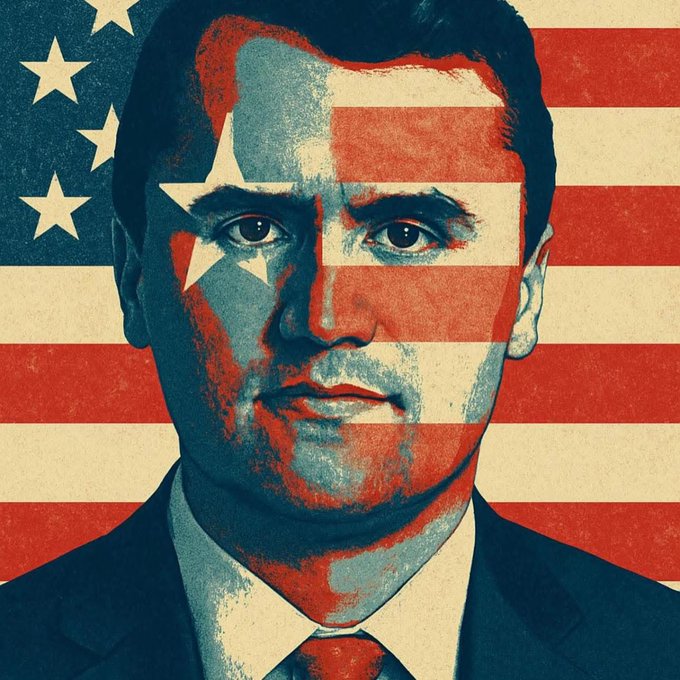
Charlie Kirk wasn’t just a conservative firebrand. He wasn’t just a speaker, a debater, or a youth organizer. He was a force of conviction in an era of compromise. At the age of 31, his assassination on September 10, 2025, didn’t end a life—it ignited a movement. And in the days since, it has become undeniable that Kirk’s influence may not only reshape conservatism but fuel one of the most significant Christian revivals in modern American history.
Kirk’s rise was meteoric, but not manufactured. He was not born into political privilege or media power. What he had was clarity, drive, and a belief that truth should be spoken boldly, even if it made people uncomfortable. In 2012, while most of his peers were still figuring out how to apply for college, Charlie co-founded Turning Point USA. What began as a simple campus outreach project quickly evolved into the most influential conservative youth movement in America. Through TPUSA and later Turning Point Faith, he redefined how a generation saw politics—not as detached ideology, but as an expression of faith, morality, and American identity.
Charlie Kirk stood unapologetically for God, country, and truth. He confronted progressive lies directly and without hesitation. He rejected moral relativism, gender confusion, cultural self-hatred, and the slow erosion of American values. But unlike so many political figures who treat Christianity as a box to check, Kirk lived it. His belief in Jesus Christ wasn’t window dressing—it was central to his worldview. He spoke of sin, repentance, obedience, and salvation from a place of conviction, not convenience.
Over the years, he built not only a media empire but a grassroots movement of pastors, students, and church leaders who finally saw that their silence was no longer righteous. His campus tours were packed. His podcast was one of the most listened-to conservative shows in America. His conferences rivaled mainstream political events. But what set him apart was not the numbers—it was the moral clarity. He called America not simply to vote Republican, but to return to biblical foundations. He challenged the church to step out of the shadows. He reminded believers that neutrality in a spiritual war is surrender.
Then came the day that changed everything. While speaking at Utah Valley University, Kirk was shot and killed by a lone attacker. The assassination was political, spiritual, and symbolic. For his supporters, it confirmed what they already suspected: Charlie Kirk had become too powerful, too effective, and too committed to truth to be ignored. His death was not the silencing of a man—it was the martyrdom of a movement.
The outpouring of grief was immediate, but so was the awakening. His memorial service, held at State Farm Stadium in Arizona, drew more than 90,000 people. It wasn’t just a funeral—it was a revival. Prayers turned into worship. Mourning turned into mission. Pastors and laypeople alike wept, repented, and recommitted themselves to the calling Kirk had spent his life preaching. It was there, in that stadium, that a spiritual shift began to take hold.
Across the country, churches reported record attendance in the weeks that followed. Youth ministries saw a flood of new energy. Pastors once afraid to “get political” began preaching with fire. Turning Point Faith chapters multiplied. And most remarkably, young people—often written off as lost to apathy or indoctrination—began standing boldly for their faith, citing Charlie Kirk as the catalyst.
This wasn’t an emotional spike. It was—and is—the beginning of something deeper. A cultural and spiritual revival is forming in the wake of his death, one rooted not in celebrity, but in truth. Kirk’s impact was never meant to glorify himself. It was to remind America that our liberty comes from God, not government. That freedom without morality is chaos. That conservatism without Christ is powerless. And that silence in the face of evil is not tolerance—it’s betrayal.
Charlie Kirk wasn’t perfect. He made enemies. He spoke sharply. He offended the complacent. But that’s exactly what made him great. He lived with urgency, because he understood that the stakes were eternal. He knew the soul of America was under siege, and he refused to offer lukewarm responses to spiritual warfare. He challenged the young to think. He challenged the church to act. He challenged the nation to remember.
Now, even in death, Charlie Kirk continues to challenge us.
His legacy is not a brand or an organization. It’s a call. To stand. To speak. To believe. And to never again let comfort keep us from conviction.
Charlie Kirk was the best of us because he gave everything for what he believed. He was the greatest of us because he reminded us who we were meant to be. And now, because of him, a generation is waking up.
Not to party politics. Not to hashtags. But to the gospel. To courage. To truth.
And that is a legacy no assassin can kill.